Thousands of rescue workers and military units from across Gallia and beyond are this morning making their way towards the Bodenland – responding to a call from the Vlaanderen government for immediate humanitarian help after Storm Adis ravaged the southern Gallian state.
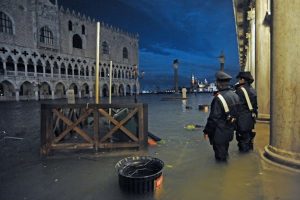
Traversing the southern Edenland before hitting the holdout of the rogue Elementist regime in Torrence, the consequences of the storm have been devastating – with as many as 100,000 people thought to have died. Late yesterday afternoon, Adis had gathered pace over the Belmish forestland, before entering Eden and then Solaria. A mix of weather patterns there only increased its power, hitting Torrence at full force. First destroying ITO infrastructure along the border, the storm then ravaged what is left of the city – unleashing almost six feet of flood water before causing explosions as munitions stores and poorly constructed energy sources were hit. Without appropriate defences, the regime’s complex tunnel and bunker network was overwhelmed – with many thousands of its remaining citizens thought to have drowned while trying to escape. The regime, which had remained completely off-grid for over a decade, then sent a signal to the outside world – “Mayday, Mayday, may the sun rise again” – its last, broadcast on several short and medium-wave channels. ITO says it had tried to contact its leaders in the prior days, seeking to warn them of the impending storm, but such communication had gone without response.
Gallian governments must now face the dire humanitarian consequences in the region – far beyond the exercises and plans they have had in place for the eventual fall of the regime. A deal, signed in 2021, between neighbouring states had modelled an almost peaceful transfer of power – foreseeing a short but bloody battle for the city of Torrence through a land invasion, with an international coalition then taking control of key sites, and refugees being moved to other parts of the Lierland and a small minority being supported to move abroad into neighbouring countries. That didn’t come to pass – with dangerous circumstances leading to pauses in progress, and eventually a push by the ITO alliance to take Torrence coming to a halt; creating a firm exclusion zone and completely cutting off the inner part of the city, where the conflict has remained frozen ever since. Around 750,00 people were thought to still reside under the Solaren leadership at the time – although, with food shortages and disease, that is thought to have reduced to just over half a million in the past five years. The regime’s leaders – and their goals – remained unknown, particularly with Burkhardt Stahl, the state’s controversial leader thought to have died in late 2020 after surveillance showed a funeral-like procession taking place and what was considered to be a period of mourning.
ITO, alongside the Gallian Defence Federation (GDF) today says it is prepared to do “whatever neccessary” in response – having moved crucial support forces into position on the continent prior to the arrival of Storm Adis at the weekend. That was not without risk, with the Freestates Union losing what is estimated to be 10 soldiers stationed on the border as it hit – with a death toll expected to rise as additional forces arrive. Humanitarian organisations – including the International Protectorate – say it will be “some days” before they are able to access the most dire conditions in Torrence, given the unsafe nature of the city, but also widespread flooding, as well as wild fires throughout its surrounding forestland in the wake of the storm. Conservative predictions suggest the humanitarian cost could essentially render the entire city lost and some government’s are this morning talking of a ‘UCS-like’ solution – mirroring the exclusion zone that is operational in the in the territory of the former Capital States in Paripana after the atomic disaster in 2008.
The Polascianan government has underlined its support to the international coalition – pledging access to resources, although Prime Minister Serbin has not yet confirmed whether that includes committing troops and other aid workers. Interior Minister Almarav however has stood-down the country’s domestic storm response given Adis’ trajectory will see it subside over the Long Sea – missing the peninsula. Serbin’s office says he is in “constant contact” this morning with the Eiffell government in particular and will seek to respond “in unison” with regional neighbours.