Prime Minister Serbin has helped Centrální Republika Premier Ionel Lisni reach a cooperation deal with the government’s of Wiesereich and Scherbatskaya, paving the way for the country to join Polasciana as a full member of the Gallian and Centrican League by the end of the year.
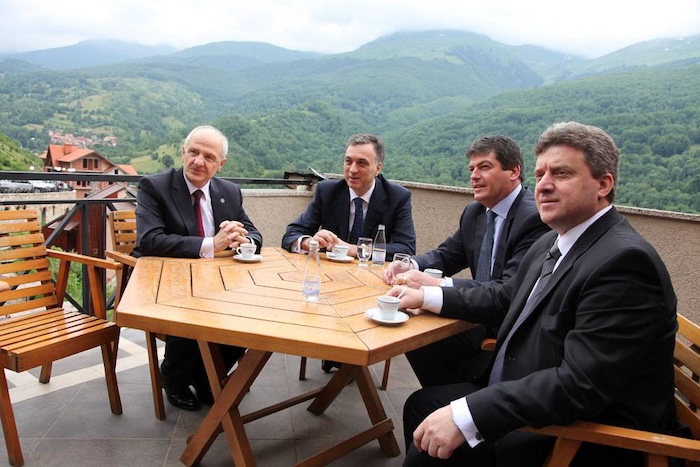
Hosting last minute crisis talks in the Uttan mountains, close to Niveri, after negotiations between Alta and Gouw Marken stalled, the Prime Minister invited his counterparts from the three neighbouring countries to Polasciana to try and find a way to resolve concerns being presented by the League’s head Simon De Smedt. Despite the major parts of a deal already being in place, and close to signing, the League has been unable to get agreement on two key parts of any deal with the Centrální Republika – namely, import and export limits in relation to automobile manufacturing, and border security. Wiesburg has long been concerned that Alta would be able to heavily undermine its own auto industry by providing cheaper models on the continental market, including by vigorously scuppering a back-door deal between Polasciana and the Republic last year, and has therefore vetoed an agreement until firmer limits are set, unimpressed with the levels inked into the current drafted text. At the same time, there remain significant concerns over the ability of the Centrální Republika to uphold the integrity of its southern border with Scherbatskaya in the Cibolenland.
Given Polasciana’s centrality to both issues, where its auto imports deal with Alta almost blew up any hope of an agreement before negotiations started and the fact that the country itself already polices a significant border with Ribnica, Serbin suggested a summit – held this weekend – to try and tease out the issues and present Gouw Marken with a solution.
In a coup for the Prime Minister, he seems to have succeeded, with the signing of the now so-called Vozviz Agreement – a deal between the Meridian leaders to cooperate on both issues, giving certainty and confidence to the League’s leadership and member states. It is underpinned by what is being called a new ‘development horizon’ and subsequent fund which sets a ten year trajectory for the entry of Centrální goods into the bloc, essentially carving up League markets, giving early (or so-called ‘development’ access) to the Centrální auto industry in areas where Wiese manufacturers are less dominant. The fund, to which Wiesburg will contribute, will help back technological development towards new models of vehicle for both countries, as well as government purchases. The move would therefore protect existing and ongoing higher-end sales by Wiese car companies, but open up increased procurement markets and allow Centrální models a foot in the door in more emerging consumer regions. The fund would also bind Wiese intellectual property into future Centrální expansion, providing financial incentives and an ongoing partnership approach. The same fund, which will also be backed by Karasicena, will provide new training capacity for the Scher police and military – enhancing cooperation and enforcement on all of its borders with the League.
Described by an unnamed advisor as a “clever but complicated play”, the agreement at its most simplest however clearly shows Gouw Marken that the Meridian states are willing to cooperate and work together, with Serbin giving the move his personal dedication and commitment. At a short question and answer event he told reporters “the accession of our neighbours into the League is vitally important, not just for our future and our economy, but for the future of the League itself” – a statement which marks a profound about-face for a Prime Minister who previously wanted to pour cold water on Polasciana’s own accession arrangements. Critics say Serbin has little interest in the actual specifics of any deal, but wants to be seen as a regional leader – others, largely from within his own government, say he has genuinely seen the impact League membership could have on the economy in both the short and long term – but only if Polasciana is joined by its closest neighbours. Ongoing membership, without ability to limit barriers of trade with its neighbours could see more of what Serbin has previously commented on as “frustration” regarding industry’s inability to sign trade deals such as on the imports of cars. He therefore wants the issue “dealt with” so that the government can drive further increases in economic growth. Softening his anti-League rhetoric of the past, the Prime Minister’s move has been pragmatic, but has not come without its risks.
It is likely the Prime Minister will now travel to Gouw Marken alongside Lisnic for a meeting with League officials to present the agreement, and try to finalise accession arrangements. Alta too says it wants to “get a deal over the line” as soon as possible, so that it can begin preparations to join in the new year. Karasicena meanwhile continues to argue that any deal is a net-positive given the growth of the Centrální Republika’s domestic markets, and the opportunity to “shape” its entry into the wider global economy. Whether De Smedt will buy the Prime Minister’s rhetoric, or see it only as an attempt to bolster Polasciana’s own domestic economic priorities, time will tell.
Any agreement will likely now be signed in May.