The Prime Minister is planning to lay out a series of options to her executive team later this week as to how the government will respond when the economy breaches the debt cap – which economists say is now a certainty by the end of the quarter.
In a speech to fellow Deputies, Finance Minister Arnold Lippman announced on Wednesday morning that the economy was expected to outperform official estimates and overshoot the debt cap by almost half a percent and reach 2% by the beginning of March. Lippman, who took over from Benjamin Usan last year, warned that the implications of the debt cap would mean ‘tough choices’ for the government. The cap was written into law in 2009 and was a political response spearheaded by former Deputy Prime Minister Marina Yanaka as a way of ensuring that the national debt would be paid down in proportion to economic growth. Yanaka and the former Prime Minister Koruin Gruaman used the cap as a central plank of the Centrist Progressive election manifesto in 2008, in direct contrast to the pledge of additional borrowing and spending by the Union Party under Maksim Obelschenko.
Having fought passionately to keep the cap in place in 2016, Prime Minister Dahn is thought to want to use the opportunity to lower government spending in several key areas, whilst protecting budgets which relate to her landmark programmes such as housing and energy reform. The previous Fedorov administration came close to having to lay out a response for an implementation of the cap in 2012 when the economy was expected to breach the 1.5% limit, but later revealed figures showing that the economy had slowed. Lipmann, who was a senior economist before becoming Deputy for Charidyn in Chimsk at the 2013 election, was seen as a bold choice for finance minister after Dahn won the 2018 legislative election, and became the third economic secretary in eight years.
His ministry is now expected to pledge to pay down the national debt at a pegged rate of 1.5% over the next two legislative terms. With much of the economy’s growth being attributed to government spending, many however are concerned that the shrinking of state support in certain sectors could see a slowing of the overall economy. Dmitry Kreshnenvo, the acting leader of the Union Party in the Assembly, warned today that the cap was likely to cause ‘self-inflicted damage’ to the economy and speaking during a debate on the economy Lippman and Kreshnenvo traded blows.
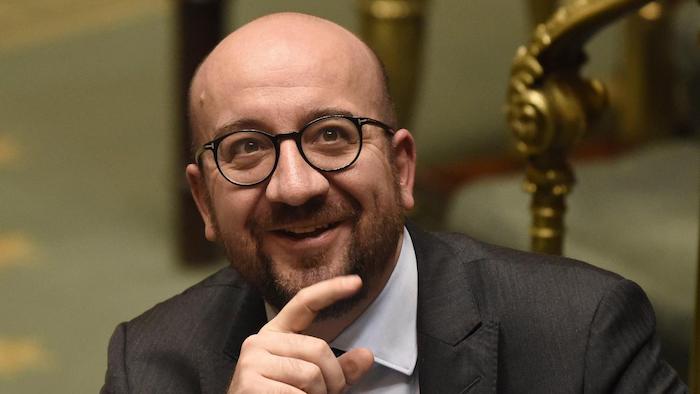
“This cap is politics. It’s politics, not economics. It’s taken the government nearly 10 years to get us to the position of growth and now, for no reason at all, they risk taking us backwards. For what? Politics. Let it be said they are the ones putting party politics before the wealth of our nation and its people.” said Mr Kreshnenvo, who served as finance minister for a year and a half during the Union Party administration of 2007-2008, in a blistering attack on the Dahn administration.
With a majority in the lower house, the Prime Minister looks set to be able to pass her strategy easily – but some in her party have raised doubts as to the effectiveness of the cap. Dahn herself, who criticised President Artamova’s plans to increase the cap to 3% whilst in opposition, now faces the dilemma of having to defend a policy that may well end up backfiring on her government’s commitments to increasing economic growth. But responding to the Union Party’s attacks on the policy, Lippman retorted, “Well, there we have it. They are still in denial. How many times do they think we can keep avoiding the national debt?”
With cuts expected in government expenditure, Dahn now faces tough calls as to which programmes to defund. Staking her claim during the 2018 election on a large-scale house building programme, and significant investment in schools and an expansion in education, including the opening of new universities in three major cities, the Prime Minister will likely face opposition from some assemblymembers on all sides of the lower house, and significant hurdles to gain the approval of the Federal Council for her plans.
Over the next two weeks the government will bring legislation to both houses, with law expected to be in place by the end of March.