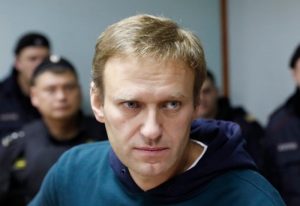
The Nationalist Party headquarters in Zamhloy have been raided by Federal Police. Officers have started a major investigation following a ruling by the country’s Federal Court that said the party had undertaken “planned, extensive and widespread” ballot fraud in the recent legislative elections. The Nationalists are accused of preparing, printing and placing thousands of fraudulent replica ballot papers into voting booths in key races. The Union Court’s Federal Electoral Regulatory Board initial ruling authorises police to “establish the facts” and to interview “major players” within the party’s hierarchy over the scandal. It is not currently known however whether that will include party leader, and presidential candidate, Alexei Sukhorukov.
The planned run-off vote for the presidency between Ivan Tattar and Sukhorukov was suspended last week by the Court “until such a time that a fair and free election can be assured”, particularly given that there was only a 2% margin between the Nationalists and third-place Coalition candidate Dimochka Yakushkin. The suspected fraud has taken place in strongholds that the Nationalists won in 2018 and 2019 – and authorities began investigating after the initial results were declared in the legislative vote two weeks ago. Officials suspected foulplay when the Nationalist vote held up to a consistent level, despite a widespread drop in turnout. Upon an initial investigation held locally in several key seats, several duplicate ballots were found. The party denies any wrongdoing and Sukhorukov has adopted a combative stance, declaring it part of a “plot” to dismiss the party’s rise.
The crisis is the first major challenge to Polasciana’s democracy in 20 years since the formation of the current state itself. A rapidly declining number of citizens took part in the recent vote, and public opinion has shifted quickly towards anger and mistrust at the political system. “The problem in itself is that the country’s politics by design is consensual. It’s built to overcome many of the cultural and ethnic divides that existed in the nation when it was formed. That has meant that its democracy has been much more stable than those fledging democracies around it – but that the country has struggled to achieve as much more recently by way of economic growth and social security. The fact that everything is through negotiation has left people tired and weary of a political system that doesn’t seem to be delivering for them – and fundamentally the country remains split” said Miladin Sirota, a professor of politics at Kamchetka State University.
During the recent campaign Prime Minister Serbin explicitly called for changes to the way that the country’s political system worked – pledging to make the presidency more ceremonial, and to govern under increased prime ministerial power through the lower house. Voters however seem to have rejected any large-scale changes, with the result providing almost a tie between the opposition Unionist Party and the governing Coalition in the Assembly. Should the vote be ratified, Serbin may have to govern from a minority position – potentially exacerbating the current challenges of split government where the president is from a different party to the government. A re-run of the legislative elections is also a possibility depending on the outcome of the full ruling of the Electoral Court which is due once the next phase of the investigation is completed.
Polasciana’s neighbours have called for the country to “swiftly” end the crisis, but have also praised the way that the country is investigating the concerns, and seeking to uphold “strong democratic rights”. Sources within the Gallian League told The Union that the group is “closely monitoring” developments – with democracy a key pillar of the pact. “The League will only become concerned if this spills into other issues or the country can’t get a hold of the crisis. A re-run election that is held with integrity and produces a result isn’t a problem – but if things get worse, then yes, obviously, there will be some concern.”