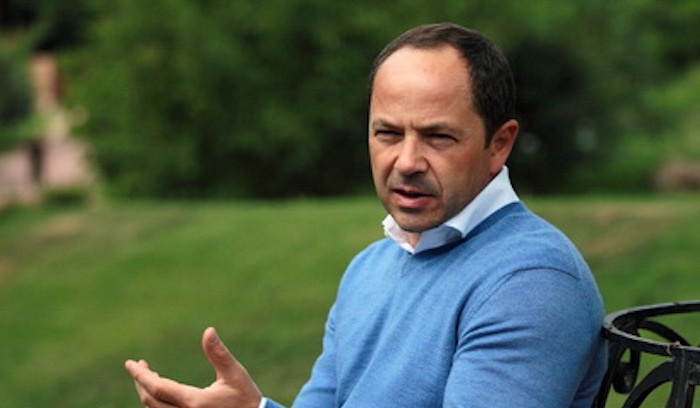
Looking around his garden in the southern outskirts of Niveri, the city he has called home since 1987, former First Deputy Prime Minister Dmitry Lebedev tells me he never dreamt of a career in politics.
“Politics wasn’t political when I was growing up – it was life and death. It was survival. Most people had two choices – the military or work; and both were political. I learned how to do politics on the factory floor – because it was my only choice. We pulled rank and supported each other – and we did so to survive”. He says as he tells me of his time working in a car factory, fitting parts onto wheel arches and organising with other workers to prevent bosses from funding underground terrorist gangs. “We would say to them, if you do this – if you use this factory to ship armaments and guns – if you build bombs here, then we go home. We will find out. We will walk. We will tell people; and you will lose everything.”
There is a certain brutality to the way Lebedev talks about coming of age. A man that sees himself as a product of war – shaped by the militaristic world of the Republics; but one who himself did not fight. “I know that people say oh Dmitry, he refused to serve – thinking he was better, or should be spared – but no. I chose a different path. I resisted because I believed in peace. I believed in a better future. That was what was destined for me.” His critics say he was able to avoid joining the military by using a health condition which apparently prevented him from doing so, getting around the strict rules that existed at the time which forced all young men to serve. But Lebedev refutes that version of events; instead depicting himself as a boy that had a conscience – a good man – who would have been a useless soldier; unable to properly handle a gun.
“I was never one for fighting. I believed – and still do – in talking. And that is what I was gifted. A way with words, not with guns. Working through our problems, together. Staring down the barrel of a gun or in the chambers of a gas bomb was never me and I knew that from birth.” Lebedev reflects on having what a doctor once referred to as “dodgy bones”. “The suffering we consumed as a nation is just not what any sane, rational, normal country would allow. We lost our way and I felt that we must take a different route. I had the opportunity to make that case; so I did” he says of resisting military service.
Instead, it was politics – or what he calls “helping form a great state” – which Lebedev prides himself on. “It sounds grand, but the reality at the time was workers, lawyers, teachers; people all across the country; organising in huddled rooms, quietly deciding to do things differently and pressuring those at the top to come to their senses and to remember that we were all human beings. That we wanted and deserved better lives. I see that as service. Yes I served my country. I helped create my country.”
Lebedev went on to serve as Minister for Defence and Disaster Relief, First and Deputy Prime Minister after leading three Centrist presidential and legislative campaigns as Chief Adviser and Campaign Secretary to former President and Prime Minister Koruin Gruaman and then later serving in the same role to Deputy Prime Minister and presidential candidate Marina Yanaka. He made a name for himself as a “man with a plan” – able to command order and discipline across the party, and found a seat close to the heart of power in Niveri which he would serve as Deputy from 2008 – which ultimately led to former Prime Minister Ludvig Fedorov welcoming him into the Executive Cabinet from 2011. He also had a brief spell as Chief of Staff to former Deputy Prime Minister Alexei Sukhorukov – now leader of the Nationalist Party; a political grouping Mr Lebedev now calls his “arch nemesis.”
“They leech. They find issues. They grasp on and they don’t let go. I had much respect for Alex’s [Alexei] ability to communicate – it’s something I worked with him to craft. But even he must now see that he’s taken that too far. He’s gone so far off the path. It makes me angry.”
Lebedev became visibly agitated as he spoke of his former boss and colleague. Does he regret serving the former Centrist high-flyer? “Not one bit.” he replied instantly. “When he was in the party he was good – he was very close to our current leader. He and Serbin saw eye to eye – they came from the same part of the party. There’s a tacit approval now, the two are coming back much closer together. Who knows, maybe Krill [Serbin] wants him back. There’s certainly an electoral argument to it.”
This line of questioning brings us back to the reason Lebedev left government – resigning after the party plummeted to its worse electoral defeat since its formation. “We got a lot of things wrong. I took responsibility for that. It wasn’t my campaign – but it was my party and it was on my watch. I was the First Deputy Prime Minister and when the actual Prime Minister refuses to take responsibility, I felt I had to.” He gives a rational, consistent explanation that he’s given many times before. But I push further asking him if he felt responsible for Katrina Fischer’s accession to presidential candidate given her close ties to the former President and his own wing of the party. “No.” He replies. “There was no one else.”
Who then, now. That’s the question at the front of everyone’s mind as the 2023 elections draw closer. With just a year to go to select a candidate, would Lebedev himself ever stand for the presidency? He’s certainly qualified. “I’d quit as a Deputy and run in a heartbeat, if my party asked me to” he replies instantly. “I have the experience, the drive and the will. But I don’t think the Prime Minister will be calling me anytime soon” he laments – recognising the gulf between the two men, their approaches and their political ideology. “He sees me as a through and through Centrist, whereas himself as a Conservative. We may be one party, but me as president? That’s probably a step too far.”
I asked close colleagues, supporters and detractors and all had similar statements of lukewarm praise for his ability, but a feeling that the time, the politics and a million other different reasons presented it from being ‘the right thing’. “I can’t see it being the right step for Dmitry or the party” said one, whilst another commented that it may be a “fine plan” but “maybe in another universe.” So, would he seriously consider it? “I’ll always serve my party. I’ll always serve my country. No matter what.”