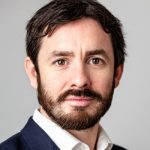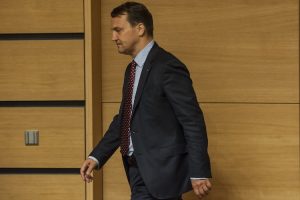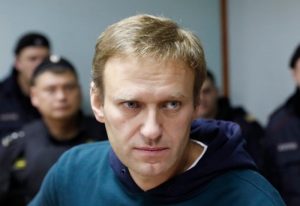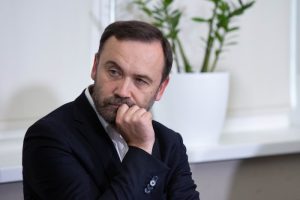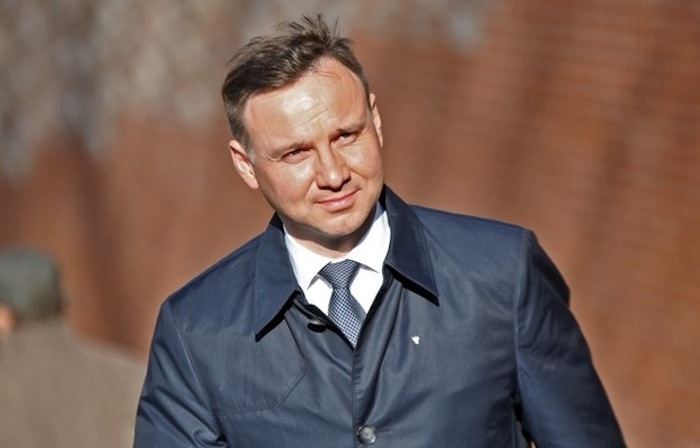
Taras Illyushin. Both Schavelev and Illyushin hail from the communitarian left of the Unionist Party.
Fyodor Schavelev, the former governor of Amar, is seeking to stand in the upcoming Union Party leadership election according to officials closely connected to the former governor.
Serving as governor of the country’s most industrialised state since 2003, Mr Schavelev has been an influential voice in the party for nearly two decades. He was succeeded last year after 16 years in the governors mansion by his close friend and ally Taras Illyushin who made the jump from Arvi mayor to replace him as governor when he announced he would not seek a record fifth term in office. Since standing down Mr Schavelev has been acting in a political role for the region’s largest working trades association, the mineral and mineworkers guild Profsoyuz, where he is thought to have contributed significantly to implementation plans for President Tattar’s landmark minimum wage policy – a piece of legislation long campaigned for by the union. His intention to return to frontline politics would require him to stand down from the role, and leave behind what is thought to be a considerable monthly salary.
Currently not serving in either the lower or upper house of the Federal Executive, Mr Schavelev’s bid will be unique as a political outsider, but is not unprecedented. Gennadiy Artamova, whilst serving as Federal Council Leader, was officially the Leader of the Union Party from 2009-2011 but appointed his deputy, Lazar Ulanov to act as his spokesperson in the Assembly. A similar arrangement could be put in place should Mr Schavelev win the leadership election. There is speculation he could agree a deal with another candidate running in the race, name another member of the caucus prior to his election or offer the runner-up the chance to represent the party until and if Mr Schavelev joined either the lower or upper houses respectively following an election.
Schavelev’s time in office, a likely point of debate between him and other candidates in the leadership race, has been chequered and at times controversial. Public disturbances in Arvi have often mired his reputation for being tough on law and order, with a number of high profile and violent protests taking place in the state over the past 10 years. The state has imposed curfews and deployed federal forces on a number of occasions, and the reopening of deep coal mines and the repeal of many ‘clean’ energy requirements lobbied for by the governor saw Schavelev criticised for reneging on his promises to radically overhaul the quality of life in the state. Similarly, Mr Schavelev was attacked as having been ‘soft’ on tackling increasing nationalist protests in the region, particularly in Arvi where Gennadiy Artamova was the target of an attempted attack alongside Mr Schavelev in 2016 whilst serving as president on a visit to the city.
Mr Schavelev is expected to be the strongest voice in the race for communitarian principles. The governor, alongside Mr Illyushin and Mr Ulanov was close to former prime minister Maksim Obelschenko, often viewed as one of the most ideological politicians in the party. With other candidates expected to take a more moderate platform, it may open up a space for Schavelev to appeal to more long-standing members of the unionist caucus who are more nostalgic about the communitarian charter, and the role of the state in the country. Last year Mr Illyushin was expected to be a competitive candidate in the party’s presidential primary using a similar strategy before pulling out of the race to instead replace Mr Schavelev as governor. With a more combative Prime Minister expected to take office in Krill Serbin, the party may well view a more ideological leader as a better choice for the party’s prospects in the coming years.
The party’s leadership election is now due to take place until July and the winner will be crowned through a combination of caucus and member votes. Interim leader Dmitry Kreshnenvo is due to announce full arrangements for the process in the next few weeks, with up to five candidates now expected to contest the race including Mr Schavelev, Kamchetkan Council member Leo Serrantes, Amarian deputy Vlad Marat and Chudniv representative Radek Allenbach. Long standing Serebrianyi deputy, Bartek Bagdat, has also been rumoured as mulling a run to join the race.