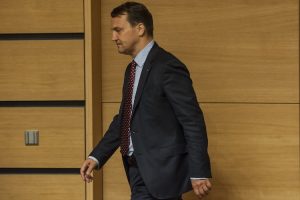
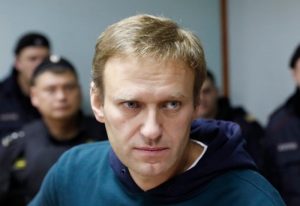
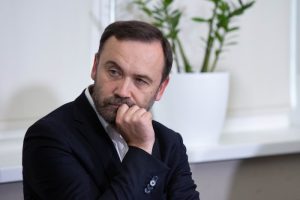
In a New Year’s holiday message to the country the Prime Minister, Ludvig Fedorov, has pledged to ‘unite’ his party and ‘renew’ their ‘mission in government’.
Marking the formal start to his tenure as Polasciana’s premier, Fedorov has urged his ailing Centrist colleagues to ‘fully support’ his leadership and ‘move beyond’ the era of the country’s politics dominated by his predecessor, Koruin Gruaman.
In an attempt to break with the past and assert his authority, Mr Fedorov revealed a new ‘Progressives’ brand for the Centrists, and named his full cabinet. Announcing his new executive team, Mr Fedorov said that his was a government ‘for all, by all’ – attempting to draw out a distance between his leadership and the fractured relationship of the past between Gruaman and his party.
A one-time critic of Mr Gruaman, Fedorov found himself promoted to Foreign Minister in June in an attempt by Gruaman to cement his authority of the Centrists after forming the nation’s first coalition government, with the United Nationalist Democrats.
The Prime Minister has attempted to calm tensions within the party by reappointing two former ministers, Kristina Rudakov and Ruslan Cherstennikov, who were cast aside in June for two new, non-Sar, UND members of the coalition. Mr Cherstvennikov returns to his former role of Sport, Recreation and Arts Minister whilst Ms Rudakov takes up a new role at the Department for Communications and Media. Taking Ms Rudakov’s former role as Transport and Tourism Minister, the Prime Minister has appointed the Gal-born representative for Gersfeld, Yevcimir – Fabian Meyer.
Marina Yanaka, who held the post of Prime Minister when Koruin Gruaman was President between 2003 and 2007, takes up the role of Foreign Minister whilst Ida Korneev is promoted from Deputy Prime Minister, to First Deputy – overtaking Ms Yanaka as the most powerful female politician. The man who steered the unsuccessful Centrist presidential campaign and long-time Gruaman ally, Dmitry Lebedev, becomes Deputy Prime Minister and also takes the role of Energy, Natural Resources and Environmental Protection Minister. Party high-flyer Asta Dahn also becomes the Education, Science and Healthcare Minister whilst Raisa Skepitrova becomes the only member to stay in post at the Department for Defence.
One of the only shocks in Mr Fedorov’s cabinet appointments was the replacement of Yevgeniy Kalandarshivilli as Finance, Trade and Industry Minister. The young politician was seen as one of the party’s brightest talents, and had established a ‘path’ to economic growth to stimulate the sluggish economy. Instead, the untested Kamchetkan representative Benjamin Usan takes the role.
While most of the cabinet has now officially taken office, the appointment of Ms Yanaka as Foreign Minister, and Benjamin Usan as Finance Minister must be confirmed by the opposition-controlled Federal Council after the break. The constitution allows the upper-house to accept or reject the appointment of the Foreign and Finance Ministers, and a strengthened majority for the Union Party in the upper-house and the relatively unknown agenda of President-elect Artamova will continue to cause headaches for the Prime Minister until his appointments have been fully confirmed following the inauguration of the President-elect next Friday. Close aides to the Prime Minister have suggested that the appointments list had already been ‘cleared’ with Federal Council leader Ivan Tattar, and the Union Party leader, Lazar Ulanov – but the opposition leaders have refused to confirm or deny whether they plan to refuse Mr Fedorov’s appointments of Ms Yanaka and Mr Usan, sparking speculation that they may not honour the deal they cut with the Centrists to install Mr Fedorov as Prime Minister. Mr Fedorov’s appointment as Prime Minister has already been accepted by President Lukyanov, and Mr Fedorov is thought to command the ‘respect’ of the President-elect.
As the country heads towards one of its most difficult years since its formation, the Prime Minister’s efforts to reform his party’s standing in the eyes of the public may not be such an easy task. With lower-house elections not due until June 2013, many are suggesting that Mr Fedorov may find it difficult to cohabit with a resurgent Union Party – who now control the upper-house and the Presidency.